December 2025
A self-reintroduction

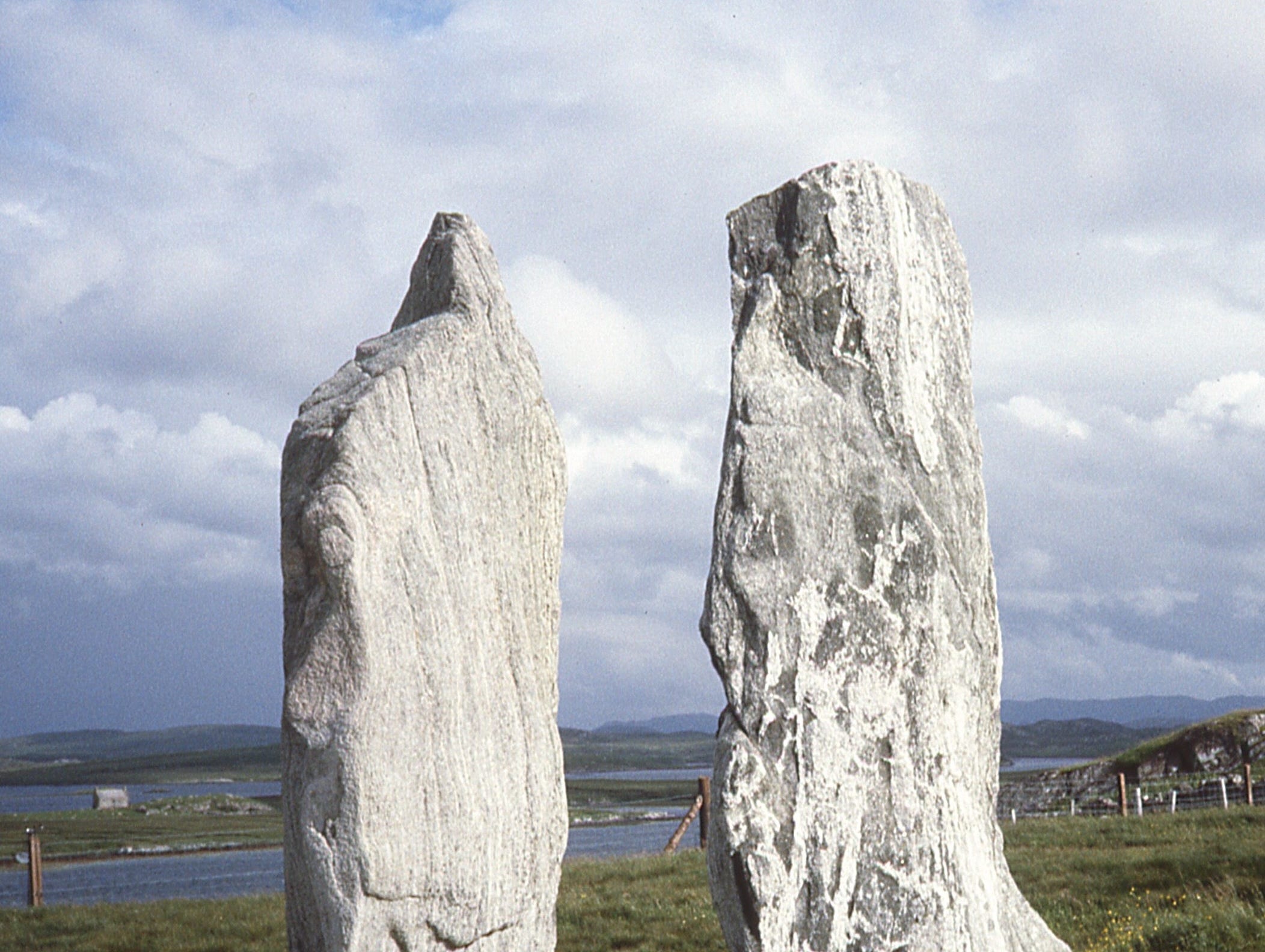
Lewisian gneiss at Callanish.
Greetings, all! I am, or remain, Alex Ross, music critic of The New Yorker and author of The Rest Is Noise, Listen to This, and Wagnerism. Here, under an ironic Wallace Stevens rubric, I intend to post more or less monthly updates on my latest work. This appears to be an effective way of reminding people of one’s continuing existence. For those who already follow my now fairly venerable blog (est. 2004), the newsletter may prove superfluous. I have no wish to increase anyone’s surfeit of verbal clutter.
The New Yorker’s fourth and final centennial issue, Our Far-Flung Correspondents, includes “Written in Stone,” my report on the fantastically rich prehistoric landscape of the Orkney Islands. On my blog, I assembled a supplementary scrapbook of photos, links, and bibliographical notes. This was a peculiarly personal project: I traveled to Orkney in 1985, when I was seventeen, and did not return until 2024. I tried to spare the reader maudlin comments on the passage of time, but I felt it strongly. My father died the week the article came out, at the age of ninety-six; he was a geologist with Scottish roots, and I remember how back in 1985 his eyes lit up when I showed him pictures of the Lewisian-gneiss megaliths at Callanish. The Lewisian is something of a geological celebrity: it was as if I’d dined with Jackie Kennedy.
The article is one in an occasional series that I mentally classify as Alex Wanders the Waste Spaces of the World. I have a primal fondness for depopulated landscapes as well as for very ancient things. In 2016, I wrote about Death Valley—my personal favorite among my New Yorker pieces—and in 2020 I chronicled the Great Basin bristlecone pines, the world’s oldest trees. Each of these articles links up to the next in a curious way. I brushed against the bristlecones while ascending Telescope Peak in Death Valley, and Neolithic Scotland surfaced when I recounted how bristlecone tree rings had contributed to the recalibration of radiocarbon dating. Where the Orkney piece might lead, I can’t yet say. Not a day goes by that I don’t register how colossally lucky I am to work for a publication that lets me follow my passions in this way.
My most recent Musical Events column recounted the world première, in radiant Valencia, of Francisco Coll’s opera Enemigo del Pueblo, after Ibsen’s Enemy of the People. Before that, I marked the ninetieth birthdays of Arvo Pärt and Terry Riley, with additional discographic notes appearing on the blog. On the New Yorker website, I memorialized the great German conductor Christoph von Dohnányi. Coming soon are a column about silent-movie organists and an essay-length reconstruction of the mysterious life of John Cage’s first boyfriend, Donald Sample.
Heading into the holidays, I warmly recommend Walter Murch’s Suddenly Something Clicked; Robert Macfarlane’s Is a River Alive?; Susan Orlean’s Joyride; Steven C. Smith’s Hitchcock & Herrmann: The Friendship and Film Scores That Changed Cinema; and, for anyone who reads German, Sandra Richter’s life of Rilke. Atop my list of favorite recordings of 2025 is Pygmalion’s staggering account of Bach’s Mass in B Minor. In the new year I hope to make substantial progress on my very slowly gestating history of the German-speaking emigration in Los Angeles.
And the world was calm.